 Best match
Related: dates and timeBeginner
Digital Clock
Calculate the current time and keep the display updated.
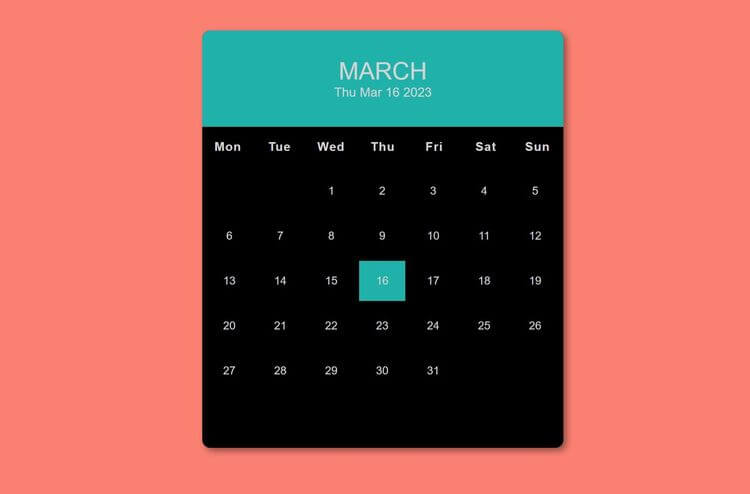
Build a digital clock →Build a month calender with HTML, CSS, and JavaScript while practicing DOM selection and DOM content updates.
In this project, we’re going to build a month calender using HTML, CSS, and JavaScript. You’ll see how to connect user interactions to visible changes on the page. Along the way, you’ll practice DOM selection, DOM content updates, and dates and time, so you can understand how the interface and JavaScript logic work together.
Recommended knowledge: Basic HTML and CSS, The JavaScript Date object, JavaScript variables and number operations.
This project runs directly in the browser with HTML, CSS, and JavaScript.
index.html<!DOCTYPE html>
<html lang="en">
<head>
<meta charset="UTF-8" />
<meta http-equiv="X-UA-Compatible" content="IE=edge" />
<meta name="viewport" content="width=device-width, initial-scale=1.0" />
<title>Month Calender</title>
<link rel="stylesheet" href="style.css" />
</head>
<body>
<div class="container">
<div class="calender">
<div class="month">
<div class="date">
<h1></h1>
<p></p>
</div>
</div>
<div class="weekdays">
<div>Mon</div>
<div>Tue</div>
<div>Wed</div>
<div>Thu</div>
<div>Fri</div>
<div>Sat</div>
<div>Sun</div>
</div>
<div class="days"></div>
</div>
</div>
<script src="index.js"></script>
</body>
</html>
Practice dates and time, javaScript calculations, and DOM Content Updates with these related projects.
Best matchCalculate the current time and keep the display updated.
Build a digital clock →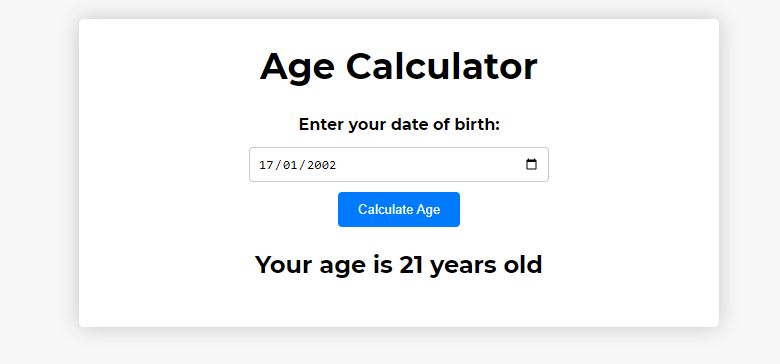
Turn JavaScript calculations into clear visual results.
Build an age calculator →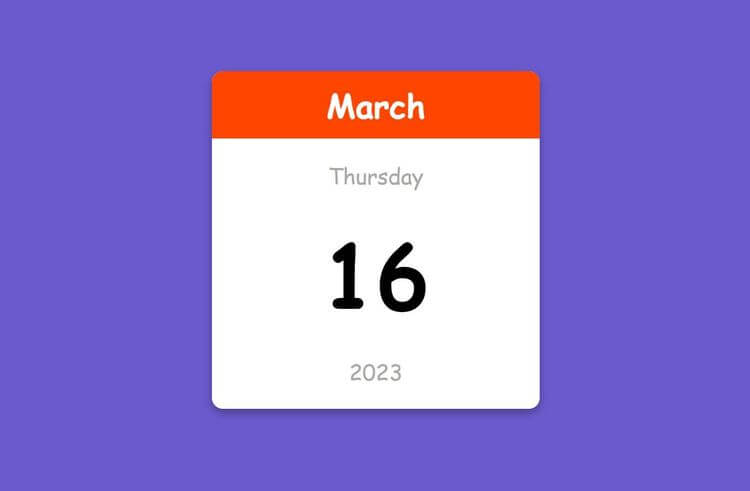
Update page content dynamically with JavaScript.
Build a mini calendar →Calculate the current time and keep the display updated.
Build a digital clockTurn JavaScript calculations into clear visual results.
Update page content dynamically with JavaScript.
Build a mini calendar